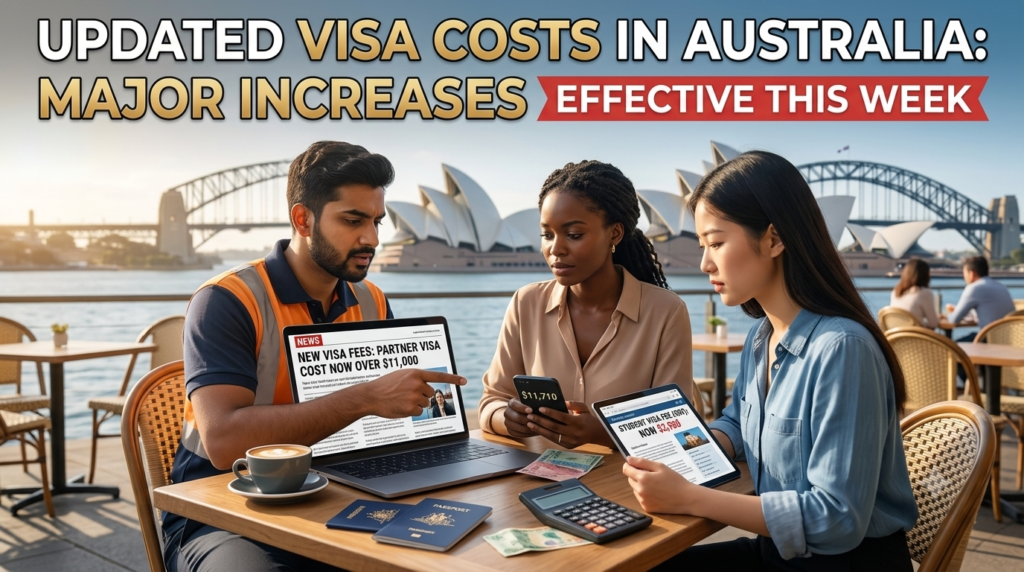
Australia has introduced a new round of visa application charge increases, and the updated fees are now officially in effect. These changes impact a wide range of visa subclasses, including partner, parent, aged dependent, visitor, student and temporary graduate visas. The adjustments are significant, with several categories experiencing sharp increases that applicants must be aware of before lodging. As migration policies continue to evolve, understanding these new costs is essential for students, skilled migrants, families, and employers planning their next steps in Australia.
New Visa Fees Across Key Categories
The latest update shows substantial increases across family, student, and graduate visa streams. Partner visas (820/801 onshore 309/100 offshore) now cost $11,710, making them one of the most expensive pathways in the migration program. Parent and aged‑related visas have also risen: Contributory Aged Parent (864) is now $6,300, Aged Parent (804) sits at $6,600, Aged Dependent Relative (838) is $6,600, Contributory Parent 173 (Temporary) is $4,245, Contributory Parent (143) is $6,300. The Temporary Graduate (485) visa for Higher Education has jumped to $5,750, and most notably, the Student Visa (Subclass 500) has surged to $2,050 for ELICOS and non-award sectors, $2,500 for other categories, representing one of the largest increases this year and significantly affecting international students preparing for post‑study pathways. Even short stay visas have been updated, with the Visitor visa (600) now costing $250.
In addition to family and student visa increases, Employer‑sponsored visa fees have also risen sharply. The Employer Nomination Scheme (Subclass 186) now costs $6,140 for the primary applicant, with a secondary applicant fee of $3,070. The Temporary Skill Shortage (Subclass 482) visa has increased to $4,015 for both primary and secondary applicants, making it a more expensive pathway for skilled workers and sponsoring employers. On top of these charges, applicants may also be required to pay the Subsequent Temporary Application Charge (STAC) of $700, which applies to certain applicants lodging further temporary visas while onshore. These increases place additional financial pressure on both migrants and employers navigating Australia’s skilled migration system.
What This Means for Applicants Moving Forward
With these new fees now active, applicants should review their migration plans carefully and budget for higher upfront costs. Students nearing graduation must prepare for the increased 485 visa fee, while families lodging partner or parent visas should plan strategically due to the substantial financial commitment involved. Migration professionals and education consultants should ensure clients are informed of these changes to avoid delays or unexpected expenses. As Australia continues adjusting its migration framework, staying updated on fee changes is crucial for making confident, compliant, and well-timed visa decisions.
Contact us today to schedule a call with our Registered Migration Agent (RMA) MARN 2117701 Jessica Yuen to discuss your eligibility and Australian migration requirements.