Choosing the right education agent can make the difference between a smooth Australian study journey and a stressful visa refusal. A genuine, ethical agent will be qualified, transparent and focused on long‑term success, not just a quick sale.
What does an ethical, genuine education agent look like?
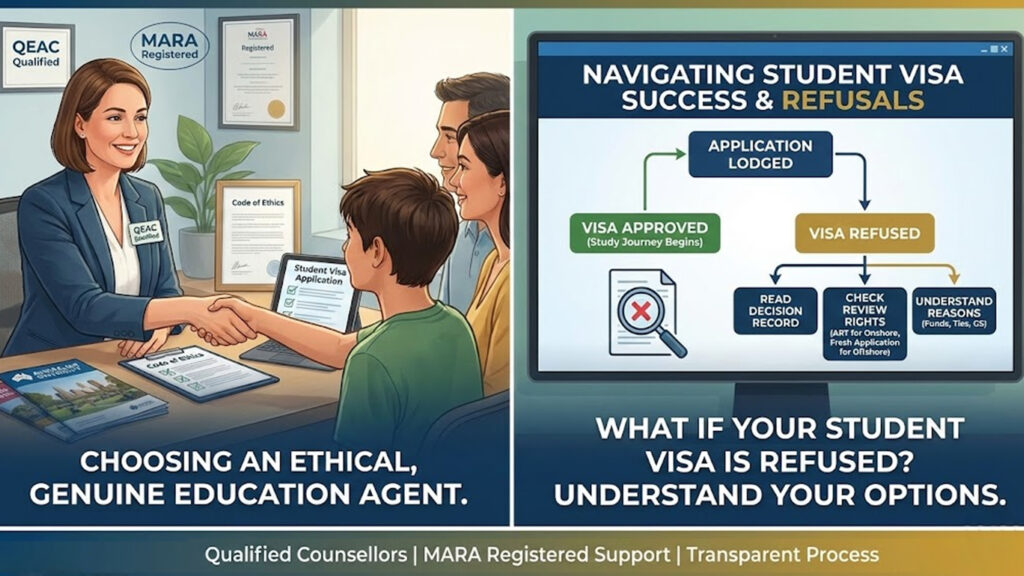
Many reputable counsellors hold recognised qualifications such as QEAC (Qualified Education Agent Counsellor), and you can check their QEAC ID on public lists or on institution websites where they are named as “official representatives” or “agent representatives”
Ethical agents understand the Australian system, including the ESOS Act and National Code, and work under written agreements with schools and colleges that require them to act honestly and in the best interests of students.
How a good agent supports your student visa
A genuine agent helps you choose the right course and provider, manage applications and ensure all visa requirements are properly addressed, rather than just “pushing” whichever college pays the highest commission.
They guide you through key items such as English proficiency tests, Confirmation of Enrolment (CoE), OSHC, financial evidence and documents that show Genuine Statement (GS) intent and ties to your home country.
If your student visa is refused: what next?
Read the decision record carefully
The refusal letter explains which criteria were not met (for example financial capacity, GS concerns, course relevance or documentation problems). This document is your starting point for any next steps.
Check your review rights and deadlines
If you applied inside Australia, you will usually have review rights to the Administrative Review Tribunal (ART), but only within a strict time limit counted from when you are taken to have received the decision.
If you applied outside Australia, you do not have ART review rights and may instead need to consider a fresh application that directly addresses the refusal reasons.
Understand the main refusal reasons
Common issues include insufficient funds, weak evidence of ties to the home country, a course that does not align with previous study or career progression, or concerns that the student may intend to overstay.
Australia also uses country risk levels, and applicants from higher‑risk countries can face stricter scrutiny and more documentation requirements than those from low‑risk countries.
Decide whether to appeal or re‑apply
Appeals can take many months or even years, so you and your adviser should weigh the likely benefit against factors like remaining study time, costs and your longer‑term plans.
How to check if an agent is legitimate
Their counsellors’ names, qualifications (for example QEAC ID) and company details are publicly listed on their website or marketing materials, and you can cross‑check them against official or recognised lists.
They are open about fees, give realistic timelines, and never guarantee visa approval or “exclusive shortcuts”; if an offer sounds too good to be true, it probably is.
How SEA can help
SEA has qualified education counsellors who are publicly listed and work under formal agreements with Australian VET, school providers and universities, following Australian standards for ethical student recruitment.
We support families from the first consultation through course selection, application and student visa lodgement, and can also advise if you are unsure about refusal risks or review options with our MARA agent Jessica Yuen (MARN: 2117701)